Blog · groundwork · 2026-07-02
groundwork 0.4.0 — the explorer and the plans index
A file browser for a whole plan folder that is itself one offline HTML file, plus a cross-plan dashboard. Tree, tabbed viewer, full-text search — no server, no index step.
By Chinedum Okerengwor · the longer story is on the Royalti blog
groundwork fixed my plans rotting; it did nothing about them sprawling. The design-system plan for one of our products is 200 files — spine docs, two sub-plans, 96 design mockups — and the plan board only answers "what's the status." Finding where a decision lives across 200 files meant opening documents one at a time.
Version 0.4.0 ships two new views for that.
groundwork explorer
Writes an artifact/explorer.html for the plan — a file browser for the
whole folder, as one self-contained HTML file.
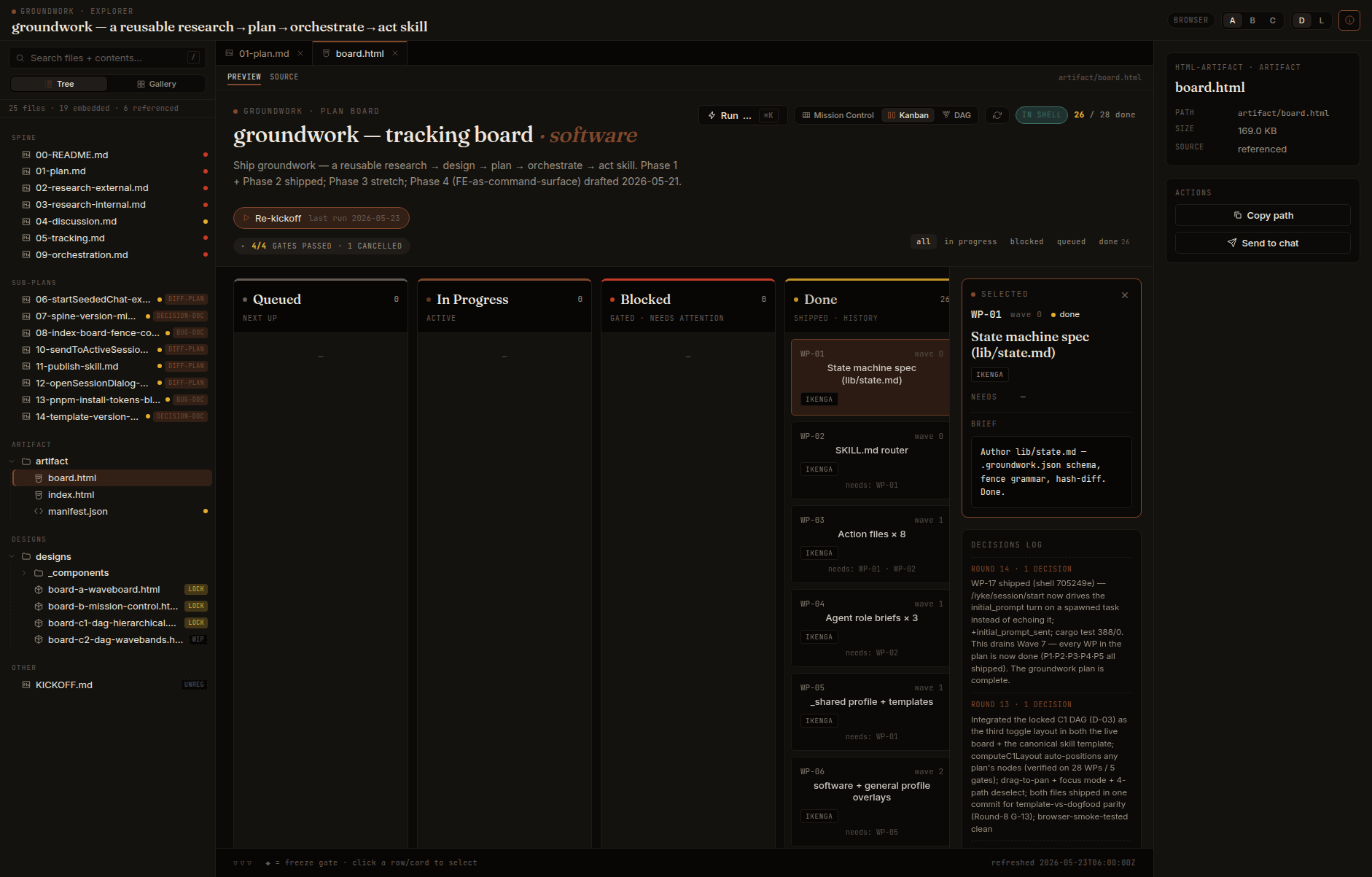
- Left tree, grouped by kind — spine, sub-plans, artifact, designs,
drafts — with a drift dot on files changed since the last groundwork write, a lock
badge on frozen designs, and an
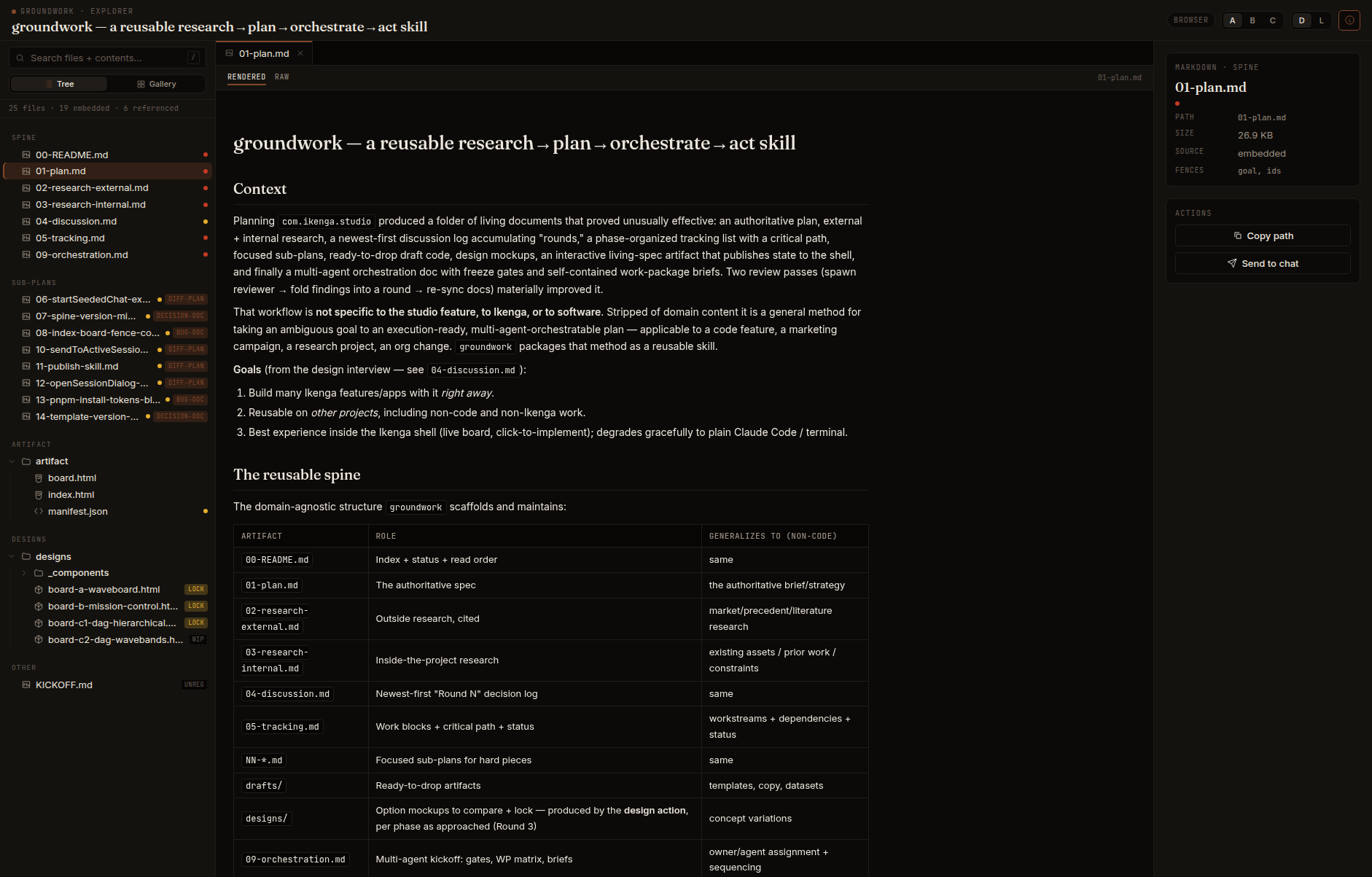
unregflag on files on disk that were never registered in.groundwork.json. - Right viewer, dispatched by type — Markdown renders inline with the generated regions visibly boxed and a Raw toggle; HTML artifacts and designs open as live previews with a Source sub-tab; images get a lightbox; JSON, code, and SVG render read-only. Files stay open as closeable tabs, with a metadata rail showing IDs, fence inventory, drift, and copy-path.
- Full-text search, no server — filename and content matching over every embedded document, with highlighted snippets. The bodies are embedded in the file, so search needs no index step and no localhost.
- A sibling to the board, not a replacement —
board.html, the living spec, anddesigns/*.htmlopen as iframe tabs. The explorer is the navigational shell that contains them. - Profile-aware default view —
design-systemplans open gallery-first (a lazy-loaded grid of live mockup thumbnails),contentplans open media-first,softwareandgeneralopen as the tree.
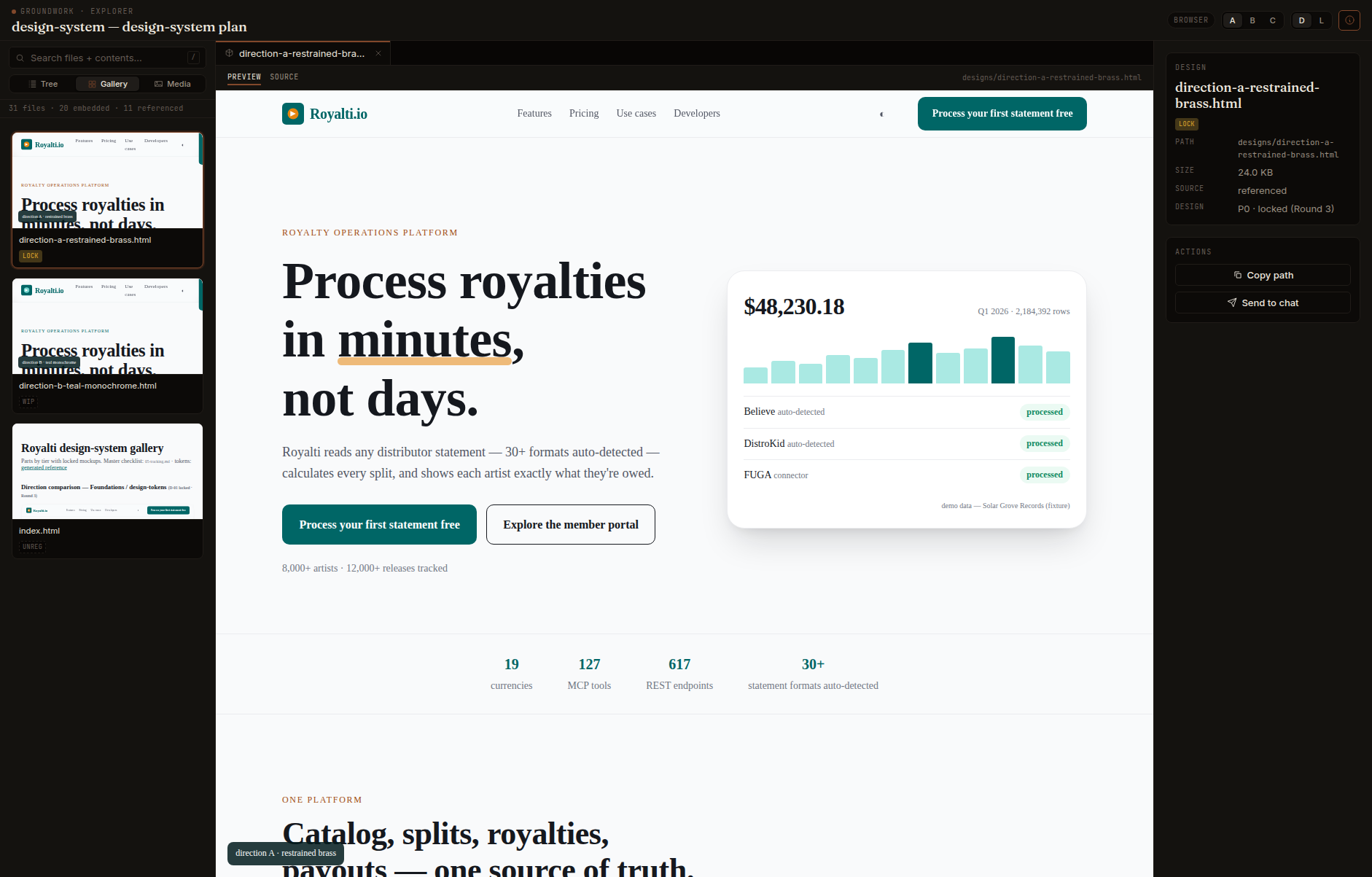
design-system profile opens gallery-first — here with a locked design
selected, previewing live in the viewer.
Fully offline by construction: React, the Markdown renderer, and the sanitizer are inlined and pre-transpiled, so the file opens air-gapped, in Claude Desktop, or double-clicked. Served or opened in the Ikenga shell, previews load live; as a lone file, embedded text still renders everything and previews degrade to a labeled placeholder. One honest constraint: embedding works against a 768 KB budget, spine-first — files past the line are referenced instead of embedded (they still preview live; they don't travel inside the lone file or appear in full-text search), and the header tells you exactly how many.
groundwork plans-index
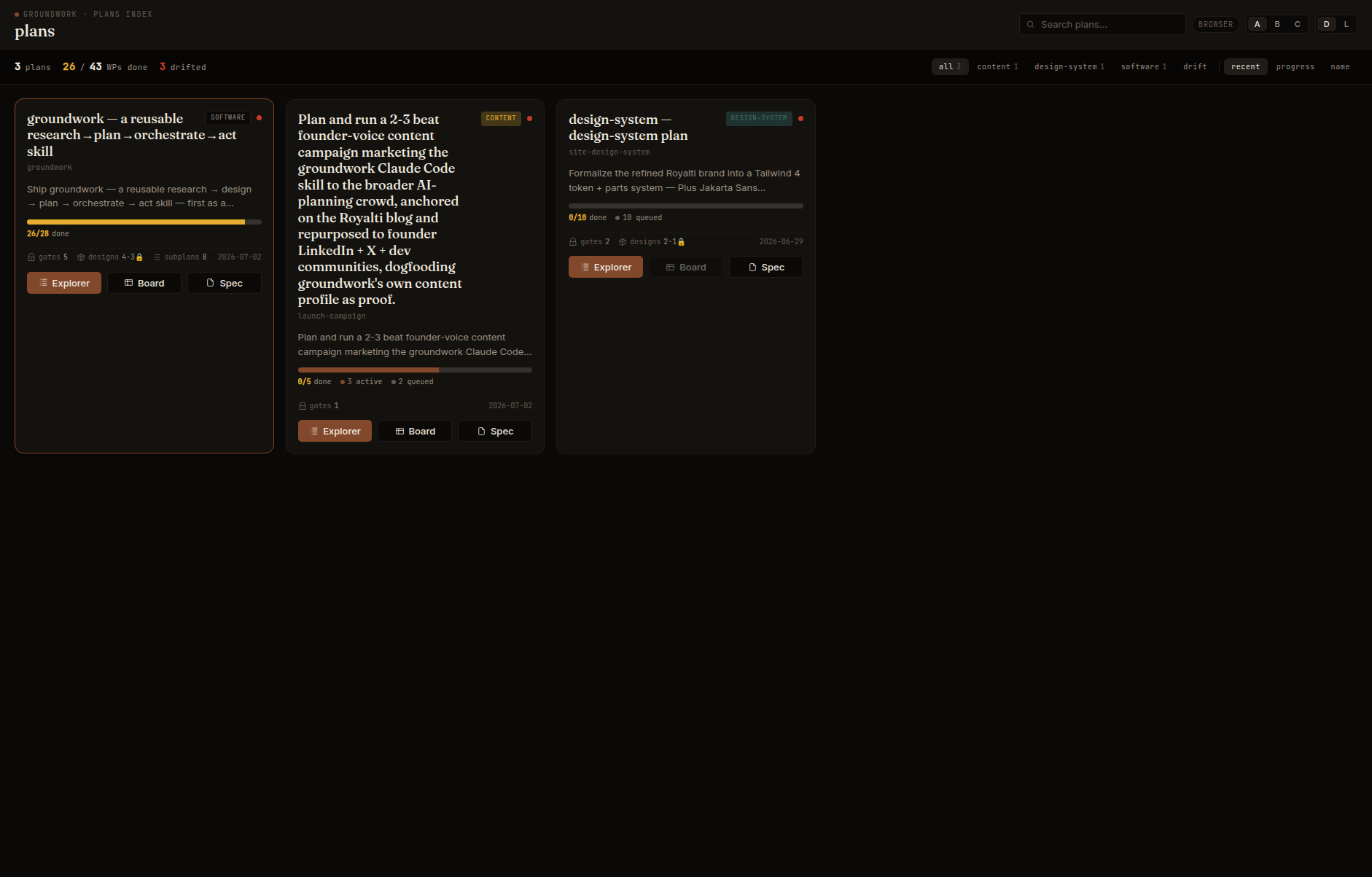
Writes a plans/_index.html one level up: a card per plan with a
work-package progress bar, profile chip, drift indicator, and drill-in buttons to that
plan's explorer, board, and spec. Buttons disable when the artifact doesn't exist yet,
so the index doubles as a "what still needs generating" view. Aggregate stats, search,
profile filters, and sort across the top. It reads the plans it lists and never writes
into them.
The bookkeeping stays boring
Re-running is idempotent — a checksum decides what changes on disk, like the rest of
the skill. Backfill a whole project with
generate_explorer.py --all-under plans/ --missing-only; keep one live with
the watch script, which regenerates on edit and reloads the served page.
Like the board, the explorer is an Ikenga artifact: it stands alone in any browser and lights up inside the shell — theme tracking, send-file-to-chat. You never need the shell.
Try it
The templates render with sample data, fully offline:
Docs: the explorer. Install:
npx skills add royalti-io/groundwork Apache-2.0, runs in plain Claude Code — and in Codex, Gemini, Cursor, and dozens of other agents through the open skills format.